First of all… congratulations! You’ve fought so hard to return and now it’s truly happened! Now that you’re back, take a moment to celebrate. Walk around campus, give your friends a hug, marvel in delight at the Pittsburgh night skyline. You so deserve it.
Now, back to business. There are still a number of things to clear up as you regain your footing as a CMU student.
Registration Hold
Though you can return to campus as early as you’d like once you are approved to return, you cannot register for classes until the registration hold on your SIO is removed. Ideally, this will happen around 2 business days after you receive your decision, but if it hasn’t, contact the HUB (412-268-8186) immediately so they can investigate what is preventing your hold from being lifted.
Often, the hold is persisting because of unpaid charges in your Student Account, which you will need to pay in the Finances tab of SIO before the hold can be removed. It is crucial that you work with the HUB to remove the hold before the course add deadline; otherwise, you will lose your chance to register for classes. Once lifted, your enrollment status in the Academic Info tab of SIO will switch from Leave to Enrolled, and the message in the course registration tab stating that there is a hold will be removed.
Classes
Once you register for classes, it’s very likely that you’ll be attending for the first time after the first day of class. If so, please communicate with your professors. You don’t need to completely fill them in on what you’ve been through, but explain that you’ve enrolled late due to a Leave of Absence and would like to devise a plan to catch up on any missed material.
It can take up to 3 days after registering for a class for the class to appear on Canvas, so ask your professor for assignments you need to make up through e-mail in the meantime.
Going Part-Time
It’s also likely that you took a leave because of extreme academic or mental-health struggles. In that case, talk to your academic advisor about whether to take a part-time schedule (below 36 units) in order to ease your transition back to CMU. Note that any financial aid offers might be affected by going part-time, so please discuss this through first with the Financial Aid Office. Additionally, as part-time students typically cannot live on-campus, you must reach out to Housing Services at housing@andrew.cmu.edu to request special permission if you’d like to live on campus while being part-time.
Housing
Once you’ve gotten the decision permitting you to return, you’ll need to reach out to Housing to reclaim your room if you lived on-campus. E-mail them to let them know you will return, and they will work to grant you keycard access to your dorm. Once they do, they will e-mail you with directions to accept your room reclamation offer in the Starrez housing portal. You must do so within 72 hours of receiving this message.
ID Card Access
Keep in mind that regaining access with your ID will only start processing once your registration hold has been removed. This process can take up to 1 - 2 weeks, so ask Housing for a temporary ID card to be able to enter your dorm, which you can pick up at the Housing Office in Residence on Fifth when you arrive on campus. Losing or breaking the temporary ID carries a $5 replacement fee, and if the ID doesn’t work, call Housing as soon as possible so they can update your housing access in their system. If this is not immediately available, call CMU PD at 412-268-2323 to get into your room.
Disability Accommodations - While You’re Waiting
Refer to the previous accommodations section in the Before the Leave page for how to acquire them. Sadly, lasting accommodations can be extremely difficult to secure due to the long wait periods to get connected to off-campus psychiatry.
As you wait, remember that you still have options
- Your advisor(s) can and will vouch for you. Ask them to reach out to your professors in the case of particularly strenuous circumstances.
- If your professor holds office hours, you can use them as accountability sessions to catch up on work so that you don’t fall behind. Make sure to talk to your professor about this arrangement as they may still have reservations about late work in general.
Is There Still a Student Affairs Mandate?
Likely yes (I am still on a mandate at the time of writing this in late February 2026), and it will likely be very similar to the previous mandates you’ve had. Sadly, I don’t have an official letter I can show you this time, but my mandate consists of three requirements:
- Continue outpatient therapy off-campus
- Get connected to psychiatric services off-campus
- Continue meeting with my liaison on a weekly basis
Likely, your requirements will be similar or identical to those Student Affairs enforced before the leave (e.g. if they required outpatient therapy and regular meetings with your liaison in the past, they likely will again).
Ask your liaison if you are unsure what version 3 of your mandate entails, and additionally you can ask how much more time under the mandate is required until you can feasibly appeal it.
Readjusting
It’s hard. I won’t sugarcoat it. Readjusting to CMU is insanely hard, especially since the last time you were here, you likely were feeling stuck and out of options. There is no clean solution for how to feel stable again while studying at CMU, but you can start with returning to habits or supports that worked for you in the past to see if they’ll work again.
Academic and study habits
Were there certain places (on- or off-campus) where you felt comfortable getting work done? Any particular people with whom you could focus better or to whom you could reliably ask questions while working? Try to gravitate towards those spaces and study groups again even when you feel like holing up in your bedroom every night.
Conversely, avoid studying in spaces that could potentially cause additional stress (for example, I’ve always disliked Hunt and Sorrells because the workaholic atmosphere there reminds me of when I blatantly disregarded my well-being my freshman fall for more time to work).
Self-care
Get. Enough. Sleep. I cannot stress this enough. The culture of this school far too often romanticizes lack of sleep and turns all-nighters into grim humor, but sleep is the enabler for next-day productivity. Without sleep, your body is not in a state to work, a problem caffeine cannot fix. As for how much sleep, you know your own needs best, so pay attention to the range of sleep that lets you function best and aim for that as often as possible.
Make sure you’re eating as well. Don’t just grab a vending machine snack and call it a day, and especially do not view eating full meals as a waste of time. To be frank, thinking that you don’t deserve to or don’t have time to eat can quickly spiral into an eating disorder, which only induces more feelings of guilt and excessive caution around food.
If you’re on a meal plan, I’m also aware that CMU’s dining options leave much to be desired nutrition-wise, so if you want free ingredients to cook healthier meals (or if you are facing food insecurity), consider using the CMU Pantry located in Residence on Fifth.
Finally, try to maintain your hygiene to some degree. Brush your teeth, shower to the best of your ability (it doesn’t have to be every day), and set aside time to do laundry. I’ve found that showering on a consistent basis helps my mood significantly the next day.
Attending classes
You might find yourself waking up in the morning too drained or miserable to drag yourself out of bed to get to class. I get it. I’ve been there too, but missing class carries with it a suffocating feeling of shame once you do inevitably start your day. That said, I know how seemingly impossible getting out of bed can feel on those mornings, so here are a couple workarounds to possibly trick your brain into getting up:
Let yourself slowly wriggle out of bed
Don’t force yourself to sit upright and instantly be wide awake. If your legs feel like concrete, dangle them off the side of your bed one by one until you can stand. If your eyes weigh a thousand pounds, slip on your socks without opening them.
Give yourself a late-to-class/missing class pass
Just two per semester. This little bit of leeway lets you know it’s ok to be imperfect when everything feels overwhelming. Just don’t do this on the day of an exam or presentation.
Productivity
As students of Pittsburgh’s last steel factory (if you know, you know), we always feel obligated to accomplish more and more, squeeze every last drop of progress out of our waking hours. But this changes when you’re recovering from such a harrowing experience.
You may have heard of spoon theory, a term coined by writer Christine Miserandino to explain how those living with chronic illness have a finite, nonreplenishable amount of energy each day to complete any task, be it “showering” or “skipping lunch,” and “when the spoons were gone, it meant there was barely energy to do anything else.” The amount of energy you have left is quantified in number of spoons, which can be used up unexpectedly, so you “can’t [always] plan in advance how [you’ll] use them” (Cristol).
Applied to the mental rockiness of readjusting to college, I’ve found that the concept of limited spoons also carries over into the next day. If you hit zero spoons today but insist on working for another hour before sleeping, you’ll end up tapping into tomorrow’s spoon supply, making you more fatigued the next morning. Therefore, the goal no longer becomes maximizing your productivity today, but protecting your ability to still be productive tomorrow.
Hence, respect your limits. If you hear your body aching for rest after a long day, give it what it needs, regardless of what you did or didn’t accomplish today. If you’re beating yourself up for not having made it all the way through your to-do list, recognize that you did as much as your spoon capacity today allowed for, and that by stopping now, you’ll be able to continue later.
Safety
Just because you’ve accessed resources while on leave to work on your mental health doesn’t mean you won’t still have flare-ups and moments of pain. Please tell someone if you feel like you might act out on your emotions, and let them stay with you until the moment passes (remember that you can call 412-268-2922 to reach CaPS, or 988). And know that you haven’t failed if you still struggle with harmful coping mechanisms such as alcohol, overeating or self-harm. Recovery is not a linear journey. What matters is you’re still willing to take it.
Know your triggers
A forced leave and its aftermath are traumatic experiences, and certain people, places, or objects that remind you of your most intense moments can cause a lot of distress even after the worst has passed.
If you need to for example, not enter a certain room inside a building or avoid large, outgoing crowds, do not feel ashamed for doing so. It takes time and so, so much practice to be able to calmly navigate those spaces again, and know that for now, not awakening those triggers is a way to protect yourself.
Opening Up to Others
Perhaps equally as hard, and something you absolutely do not have to do if you don’t feel comfortable. You don’t owe anyone outside of your CMU care team an explanation of what happened, but here are some tips should you tell others about your experiences.
Abstaining
If people pressure you into sharing sensitive details from your LOA (e.g. details of a crisis, the home environment you went back to), you do not have to tell them. This is your information, and you have every right to maintain a sense of privacy. Responding with something like, “I don’t feel comfortable sharing that” is all you would need to say.
Conversely, you might find yourself actively wanting to share what you went through with others, which is completely understandable and doable. It’s just a matter of finding the right people to confide in. If you have close friends whom you can lean on for support, ask if they’re in the headspace to listen, and tell as much or as little as both of you are ok with. Otherwise, outpatient therapy services can also be a safe, cathartic space to unpack what you’ve endured.
Addressing the unknowns
Do you want to know a hidden luxury that most CMU students take for granted? Knowing when it is you’ll graduate. Because a leave of absence, especially a forced one, messes with the entire idealistic schedule of a four-year graduation. This can be especially embarrassing to open up to others, but know that there is nothing wrong with stating your graduation timeframe is unknown. You can even be sassy and sarcastic about it, like “hi, my name is Meabyn, I’m majoring in who-the-hell-knows-at-this-point, and I’ll graduate whenever I feel like it.”
Don’t compare yourself to others!
One of the most jarring aspects of readjustment is being thrust right alongside students whose CMU careers are completely intact. They completed every semester. They’re taking a full course load, and maybe a handful of jobs, TA positions, and club involvements while they’re at it. They have a bustling social life and are doggedly vying for internships and research and might even be winning awards.
Let me be clear: you do not need to be where they are, because they have not gone through what you have. This is not to discount everyone’s individual struggles, but no matter how much of an underachiever or “failure” you feel compared to everyone else, know that you are not doing inherently “less” with your life than they are. You are getting up and trying again at a university that previously almost broke you. You are doing the crucial work of regaining your mental stability. That is effort, and after all you’ve been through, that is a life well lived.
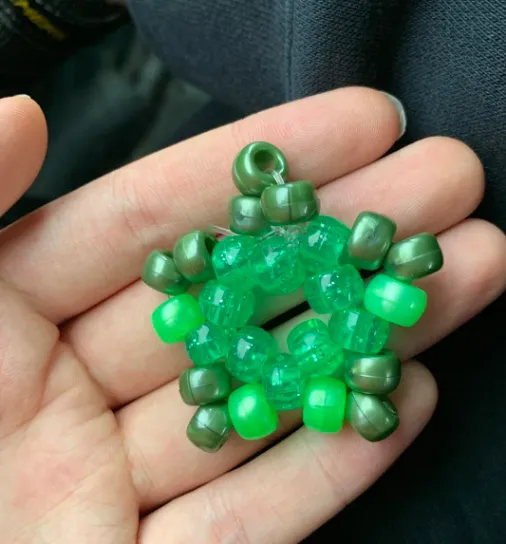 Figure 9: A star I made out of beads in art therapy at the psych ward
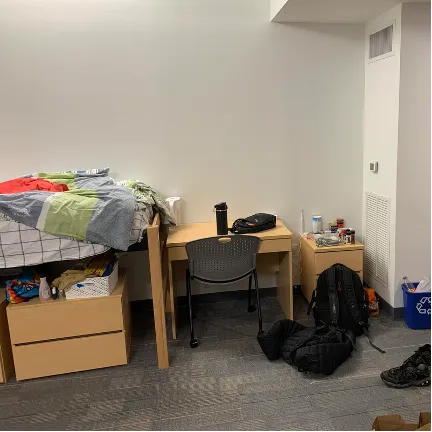 Figure 10: Fully moved into my dorm room the day I returned to campus
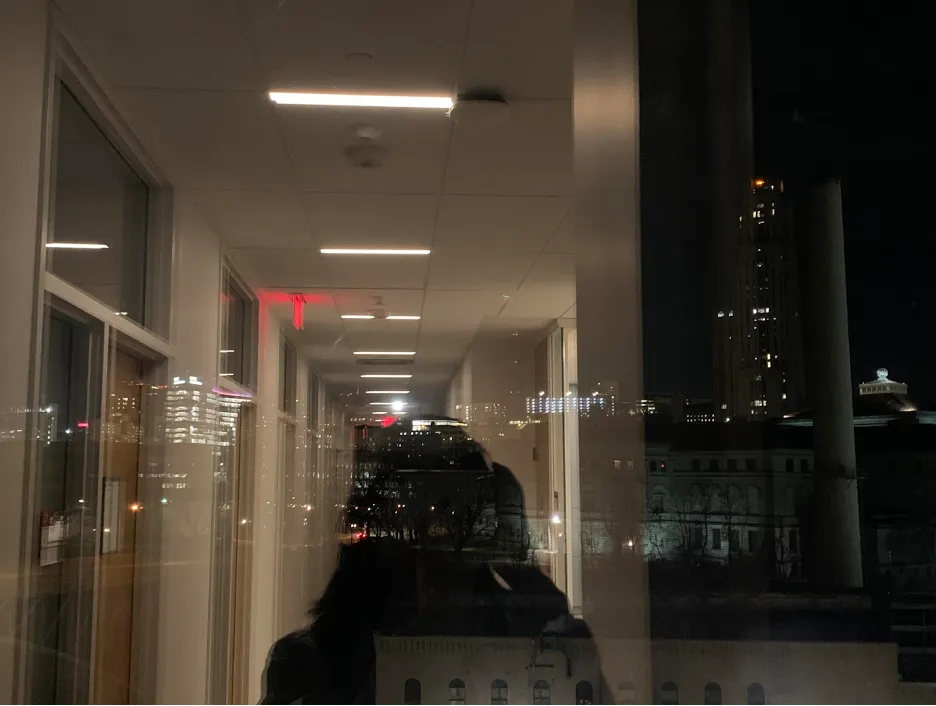 Figure 11: The glittering lights of Pittsburgh, taken at Scaife floor 2, 43 days after my leave of absence ended